Routes Set by the Tide, Not the Diary
Departure times move through the month because the tide does, and we publish them a season ahead so people can plan properly. A walk that should leave at six in the morning leaves at six; one that would be unsafe on a spring tide simply does not run. Each route has a calculated window with an hour of margin built in at both ends, and the guide turns the group back at the agreed time regardless of how good the birdwatching is. Guests get the estuary at its most spectacular — the moment the water begins to return across a mile of flat sand — from a position where watching it is a pleasure rather than a problem.
Ground Knowledge That Cannot Be Improvised
Estuary sand changes after every storm and every high river flow. Soft patches appear where firm ground was last month, channels migrate, and a route that worked in April can be dangerous in June. Our guides walk and probe the crossings weekly, replace the marker poles after gales, and record what they find in a shared log. That is why groups walk in single file behind the guide across certain stretches and spread out freely across others — the difference is known rather than guessed, and the reasons are explained rather than issued as orders.
Birds in Numbers You Can Hear
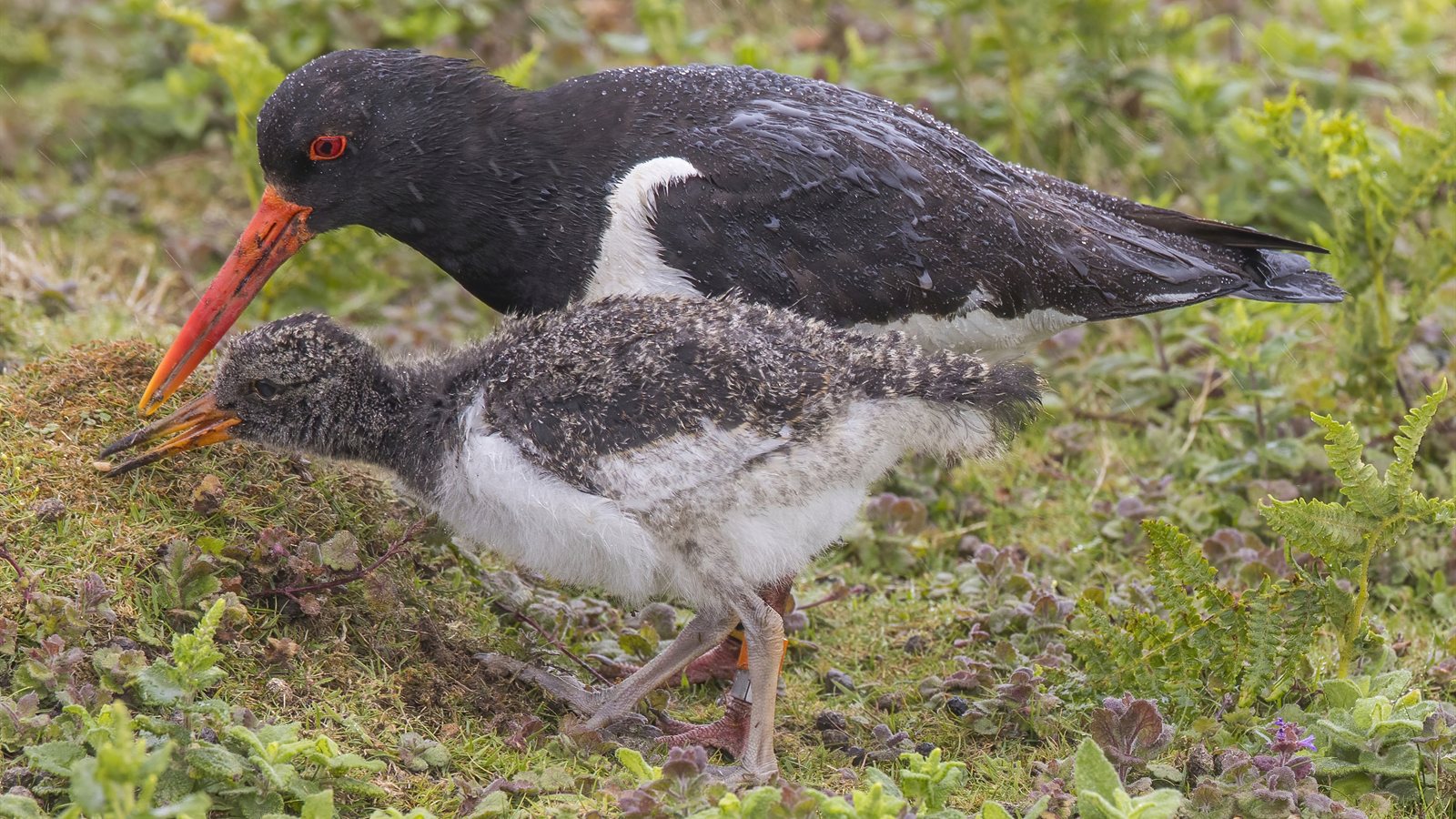
An estuary in autumn holds tens of thousands of waders, and the sound of a knot flock lifting off the mud is something people remember for years. Walks are routed to reach a high-tide roost at exactly the moment the birds are pushed up onto the marsh, at a distance close enough to see plumage through a telescope and far enough that nothing takes flight because of us. Guides identify by call and behaviour as well as appearance, loan binoculars are carried for anyone without them, and the species list from each walk is emailed afterwards.
Everything You Need Is Supplied
Nobody needs to buy equipment to join a walk. We provide wellingtons and neoprene socks in every adult and child size, waterproof jackets and over-trousers, walking poles, dry bags, binoculars and a telescope, plus hot drinks and something to eat at the turning point. Bare feet are genuinely the best option on warm days and we encourage it. A changing tent and hot water for rinsing sand off legs and boots wait at the finish, along with a shed where wet gear can be left rather than carried home in a car boot.
Small Groups, Proper Pace
Public walks are capped at fifteen with two guides, which is small enough that everyone can hear the commentary and nobody is strung out over half a mile. The pace is set to the slowest walker and rest stops are frequent, because the distances look deceptively easy on flat ground and soft sand is tiring. Families with children from six years old are welcome on the shorter routes, and we run dedicated slow walks for older participants and anyone returning to activity after illness, with a shorter distance and firmer ground throughout.
A Place Left Better Than Found
Estuaries take the waste of an entire catchment, so every walk carries a bag and most return with it full. Beyond that, we plant salt marsh with a coastal trust each spring, monitor mussel beds, take part in wader counts, and keep groups well clear of roosting and nesting areas during the sensitive months. Dogs are not permitted on any walk, which loses us bookings and protects the birds. What we spend, count and plant is published in a short annual report available to anyone who asks for it.